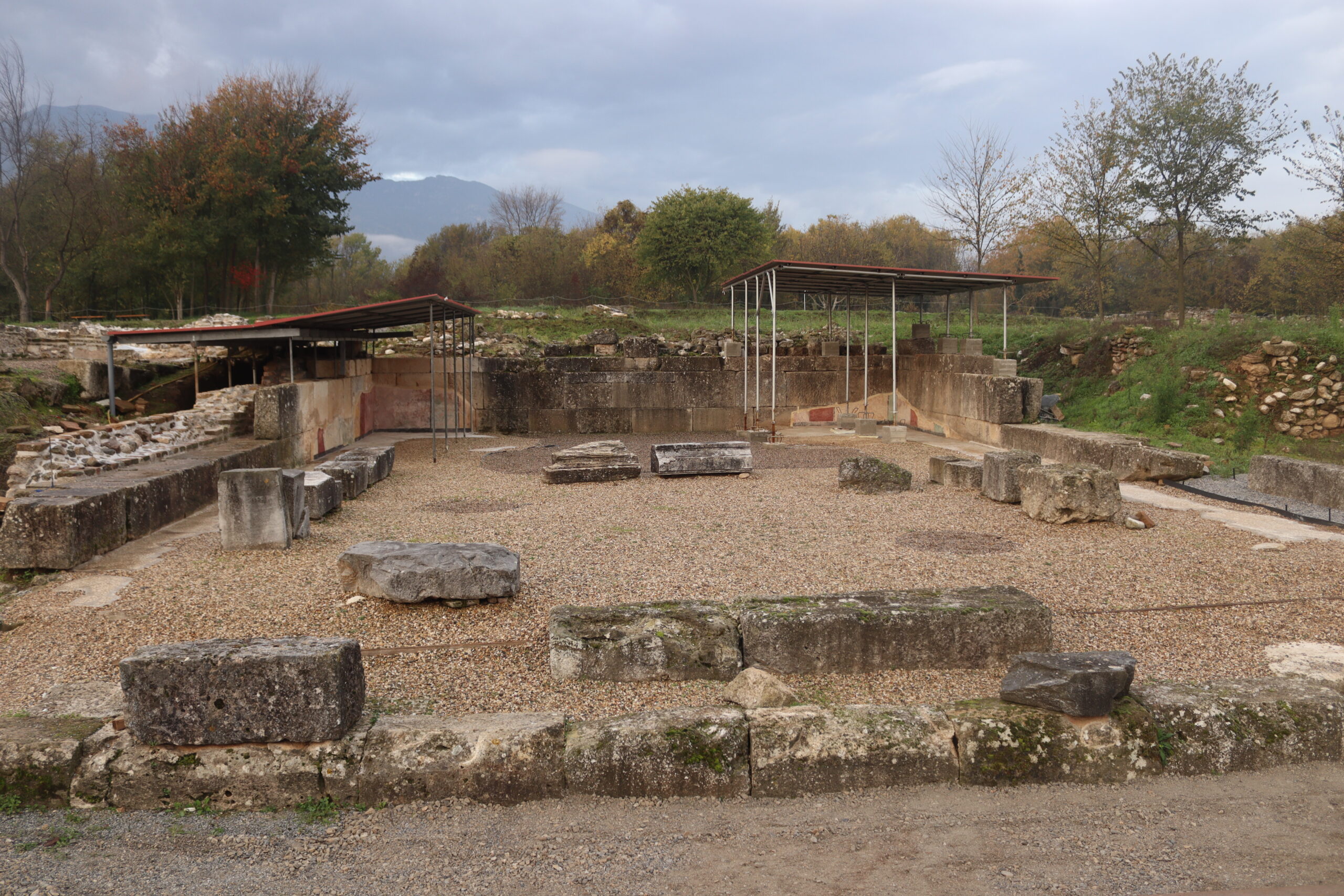
The “Sebasteion” of Dion is a monumental single-room building that occupies the central area of the western, narrow side of the Roman agora. It has internal dimensions of 10.40 m x 16.50 m and is carefully constructed with large stone blocks.
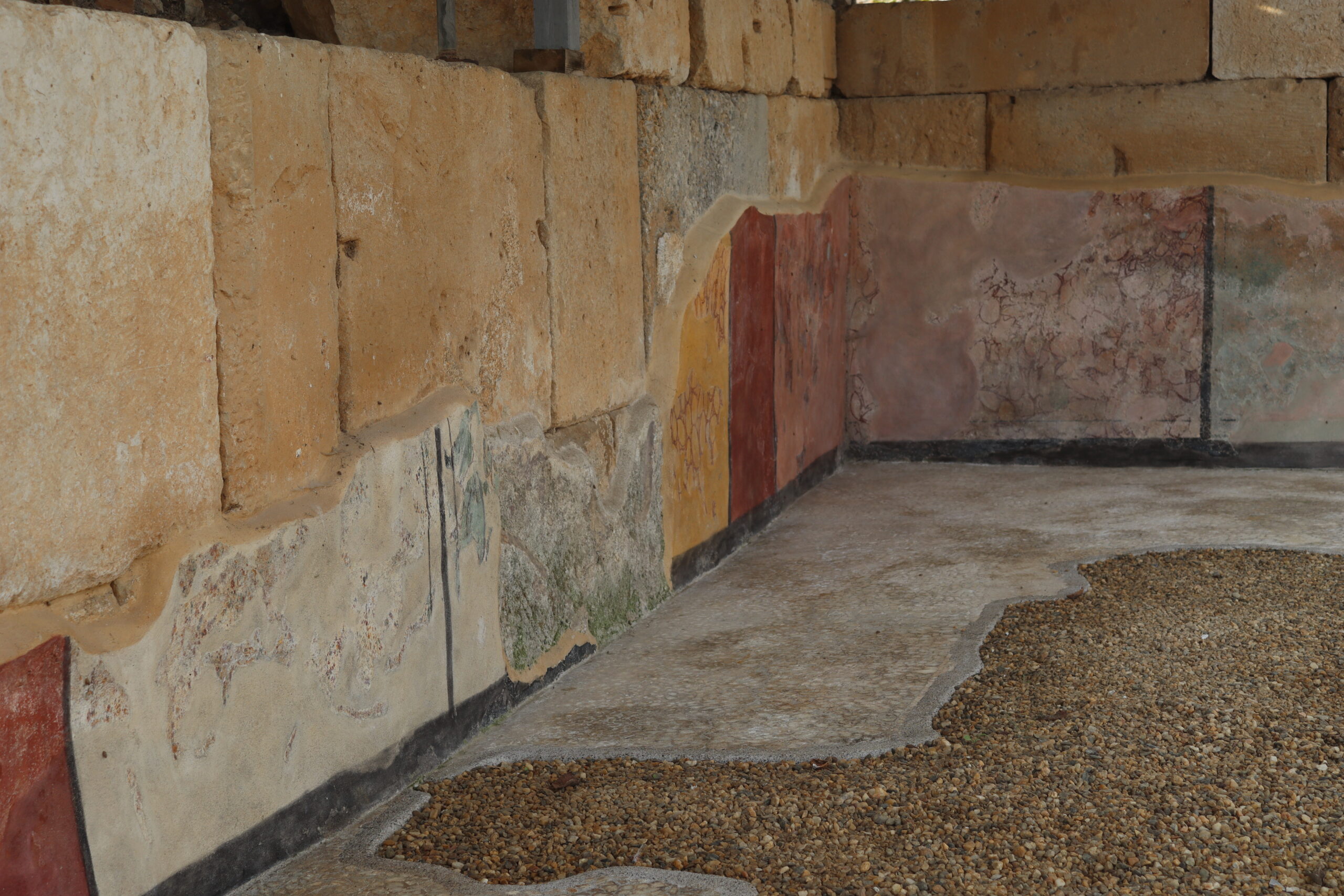
The floor was paved with a mosaic, today heavily damaged by later interventions. Better preserved is the perimeter zone of the mosaic, running around the three walls. It is believed that it surrounded a more elaborate central motif, of which only sections of the white background and of a double black “frame” have survived to this day.
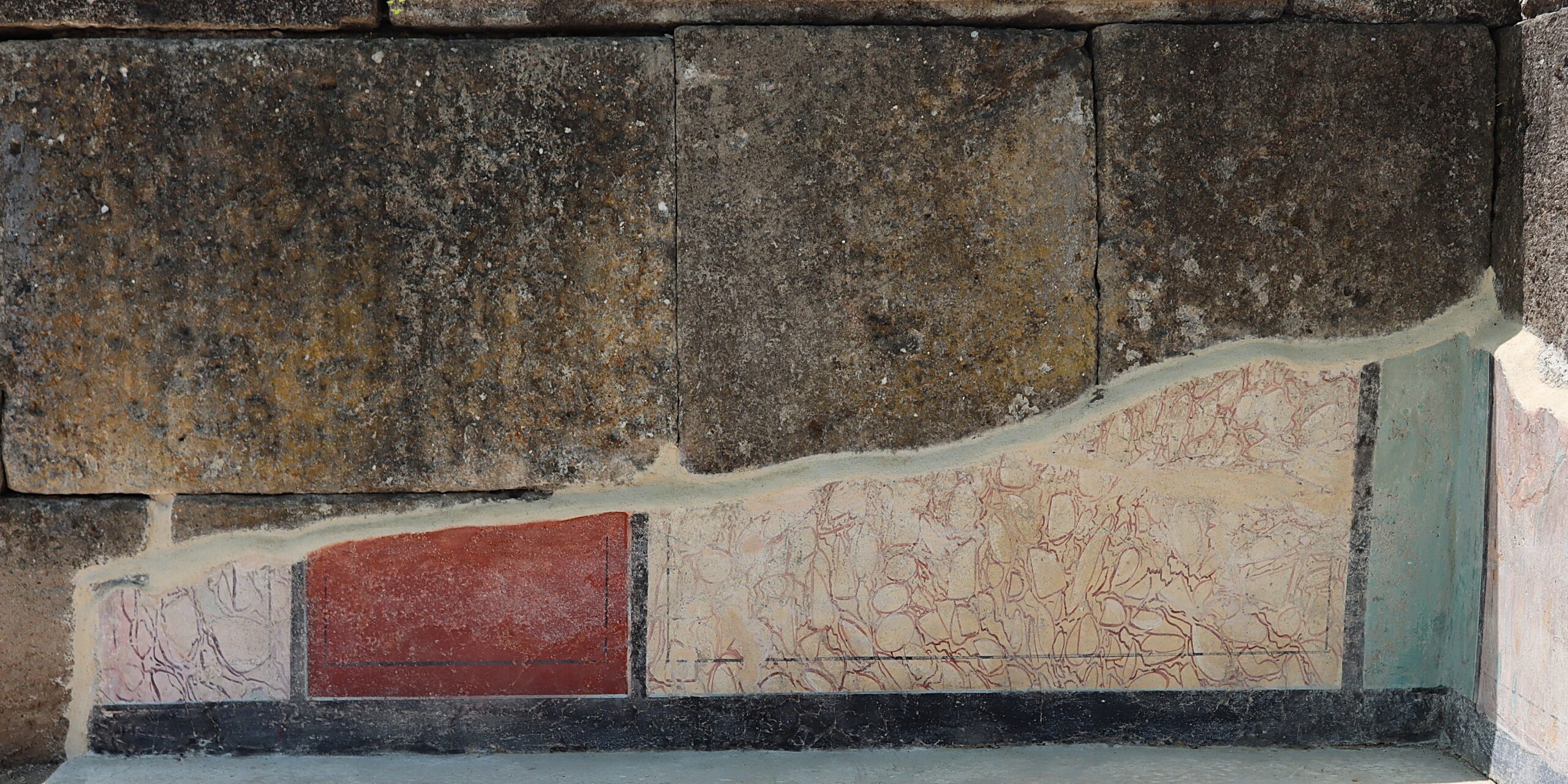
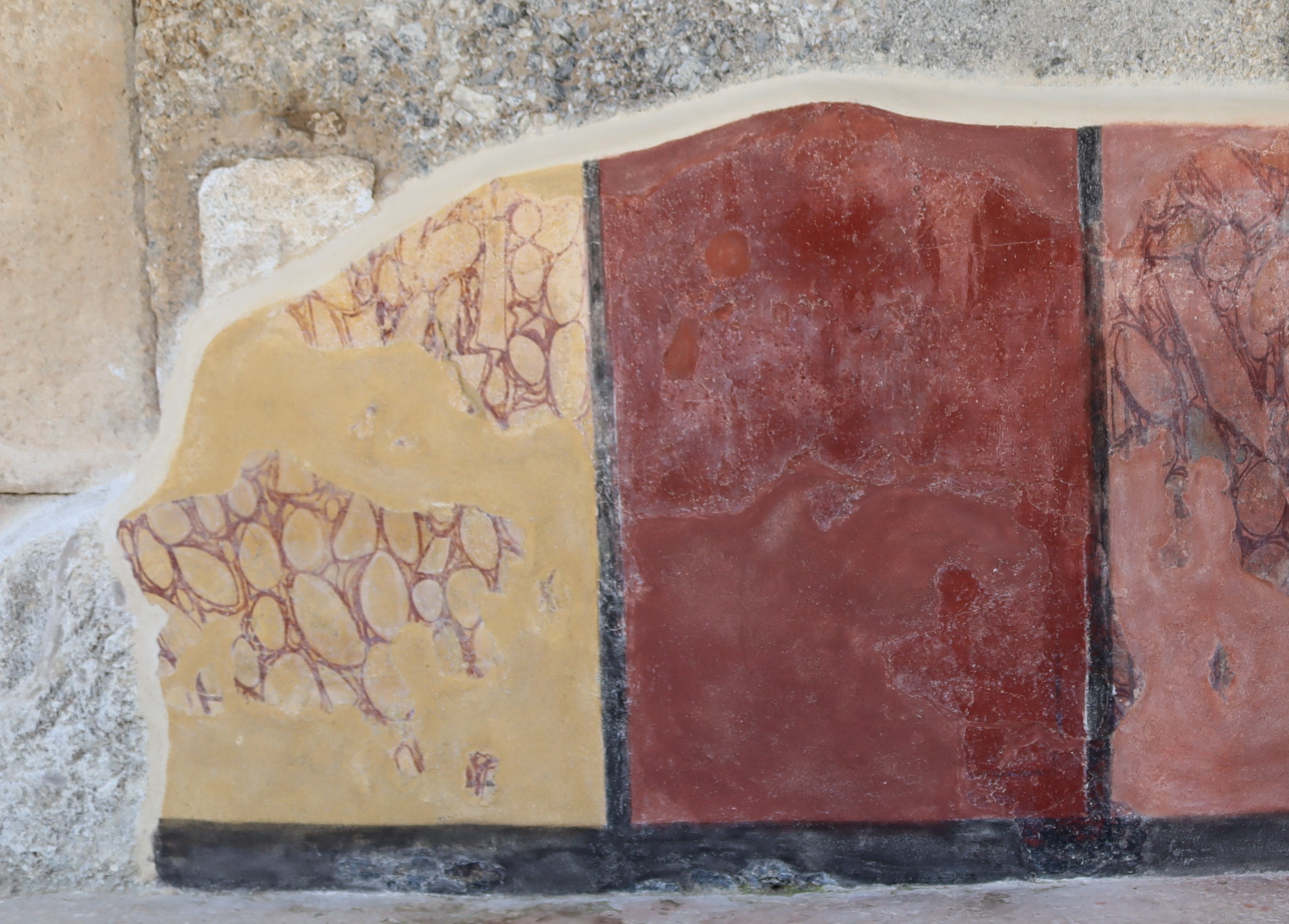
The building’s walls were decorated with wall paintings imitating coloured orthomarmarosis (decorative wall coating with marble), preserved in the two corners of the building. The wall paintings consist of alternating panels of different sizes and colours (red, green, brown, ochre) framed by black bands.
The prominent axial position of the building in the architectural landscape of the Roman agora, its monumental construction, its luxurious decoration with mosaic floors and wall paintings, along with the fragments of semicircular pedestals inside it, led to its identification as a Sebasteion, a temple dedicated to the worship of Roman emperors, who bore the title Augustus which is translated into the Greek word “sebastos” (the revered).
Underneath the mosaic floor, approximately in the center of the building, a 6m-deep well was excavated, known as “Pit of the Sebasteion”. It contained a wealth of ceramic vessels, figurines, figurine moulds and clay loom weights, dating back to the 4th and 3rd century BCE, as well as to the Late Hellenistic period. They are possibly evidence of the area’s long-standing commercial and workshop character.