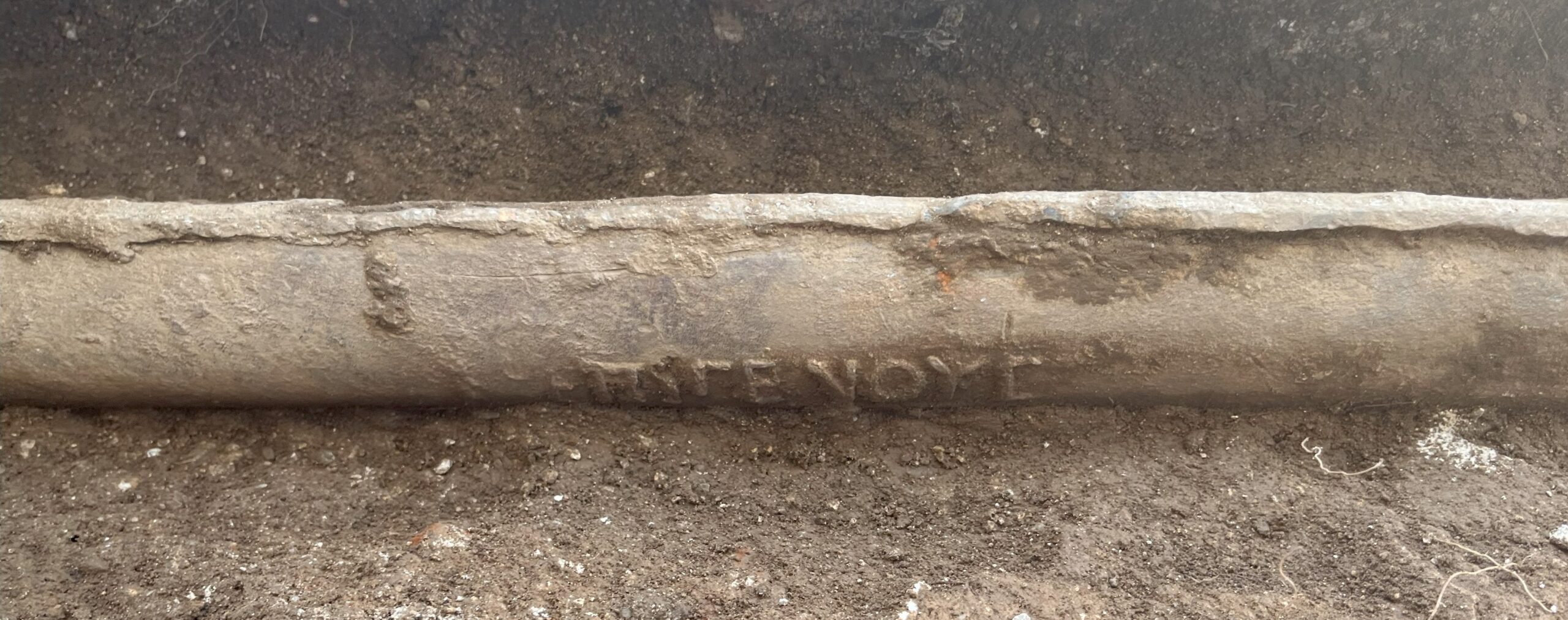
Located next to the Roman Agora (forum) of Dion, the “House of Epigenes” is a luxurious urban residence. Its conventional name derives from a lead water pipe (fistula), bearing the relief inscriptionΕΠΙΓΕΝΟΥC (Epigenous), that was discovered inside the house.
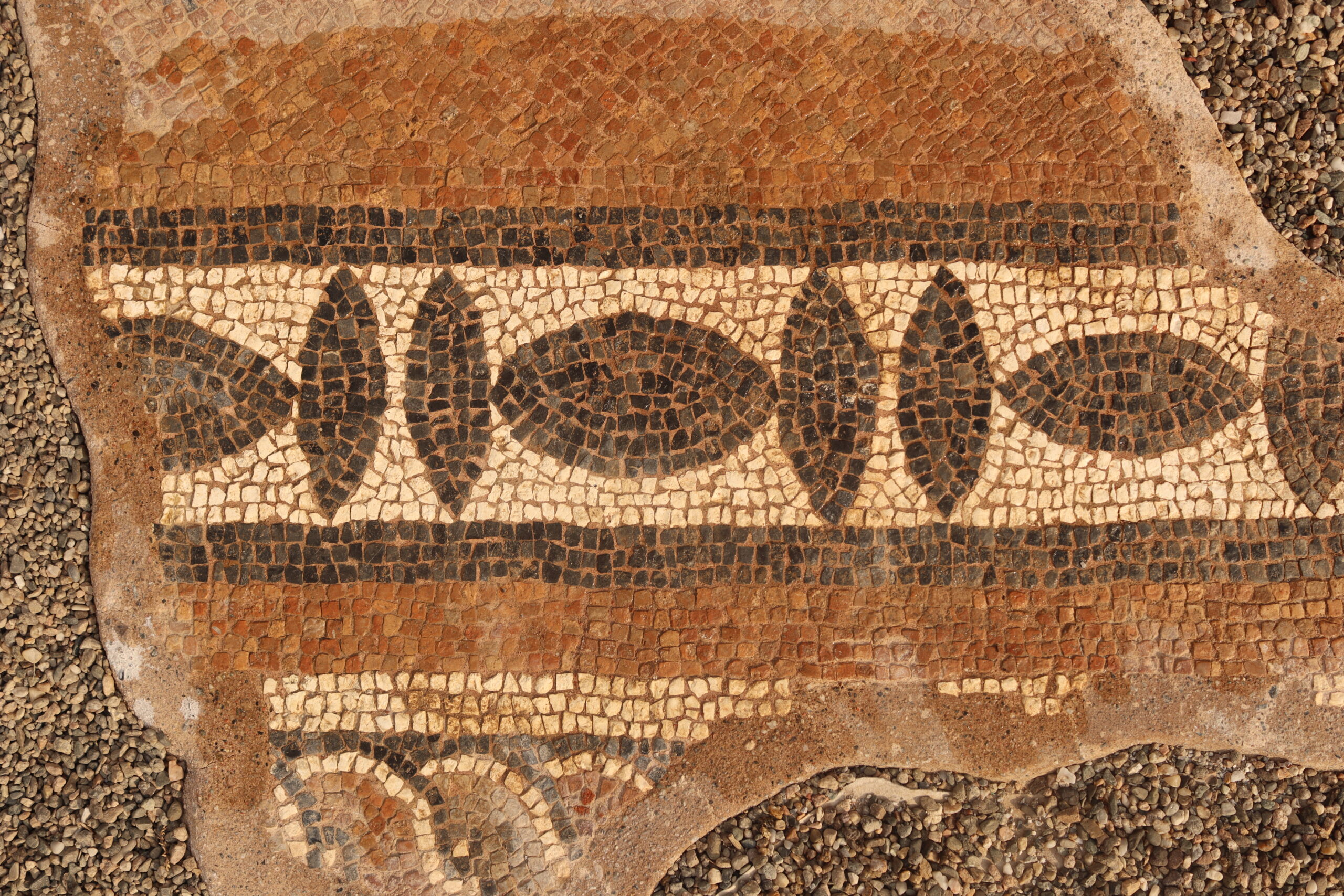
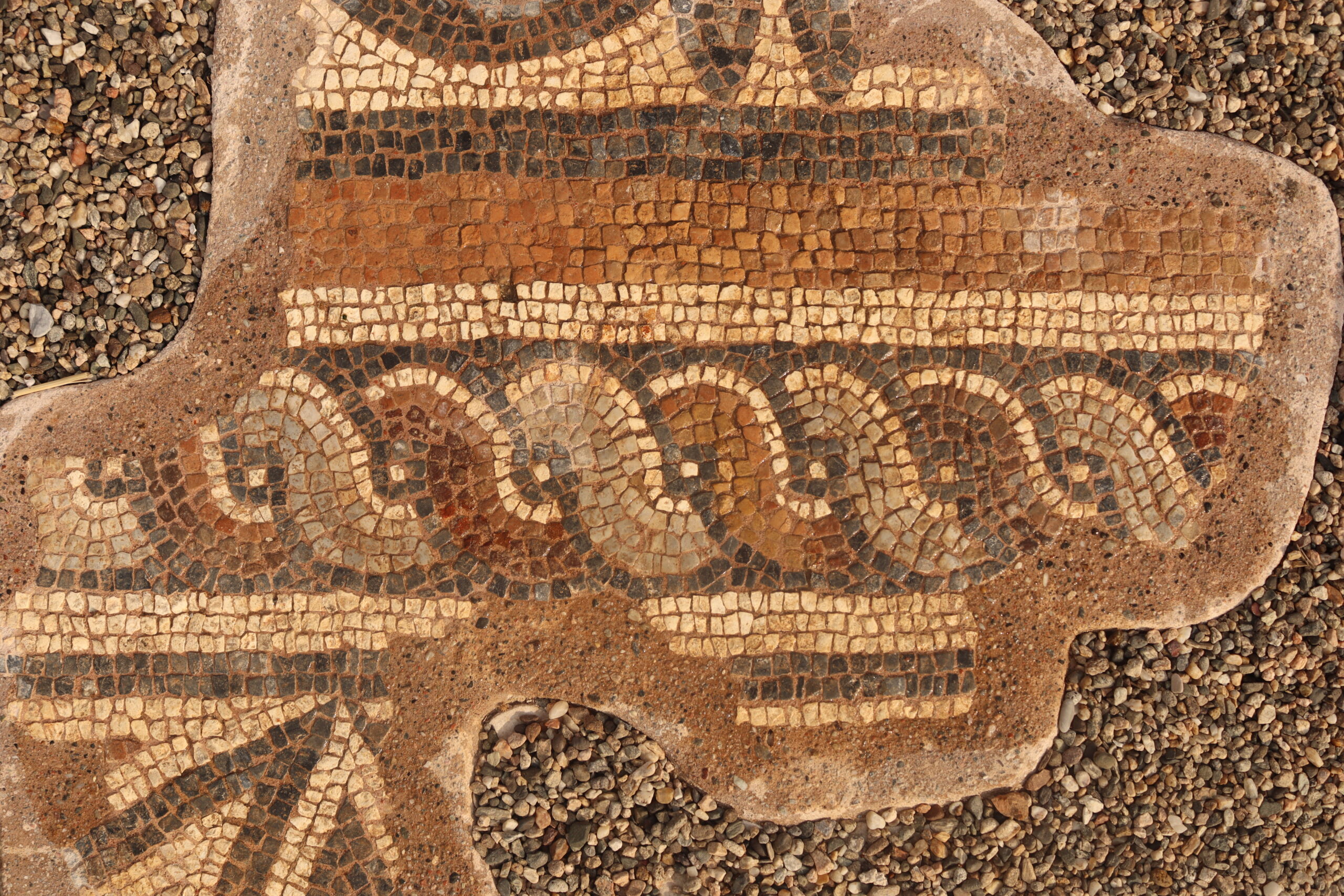
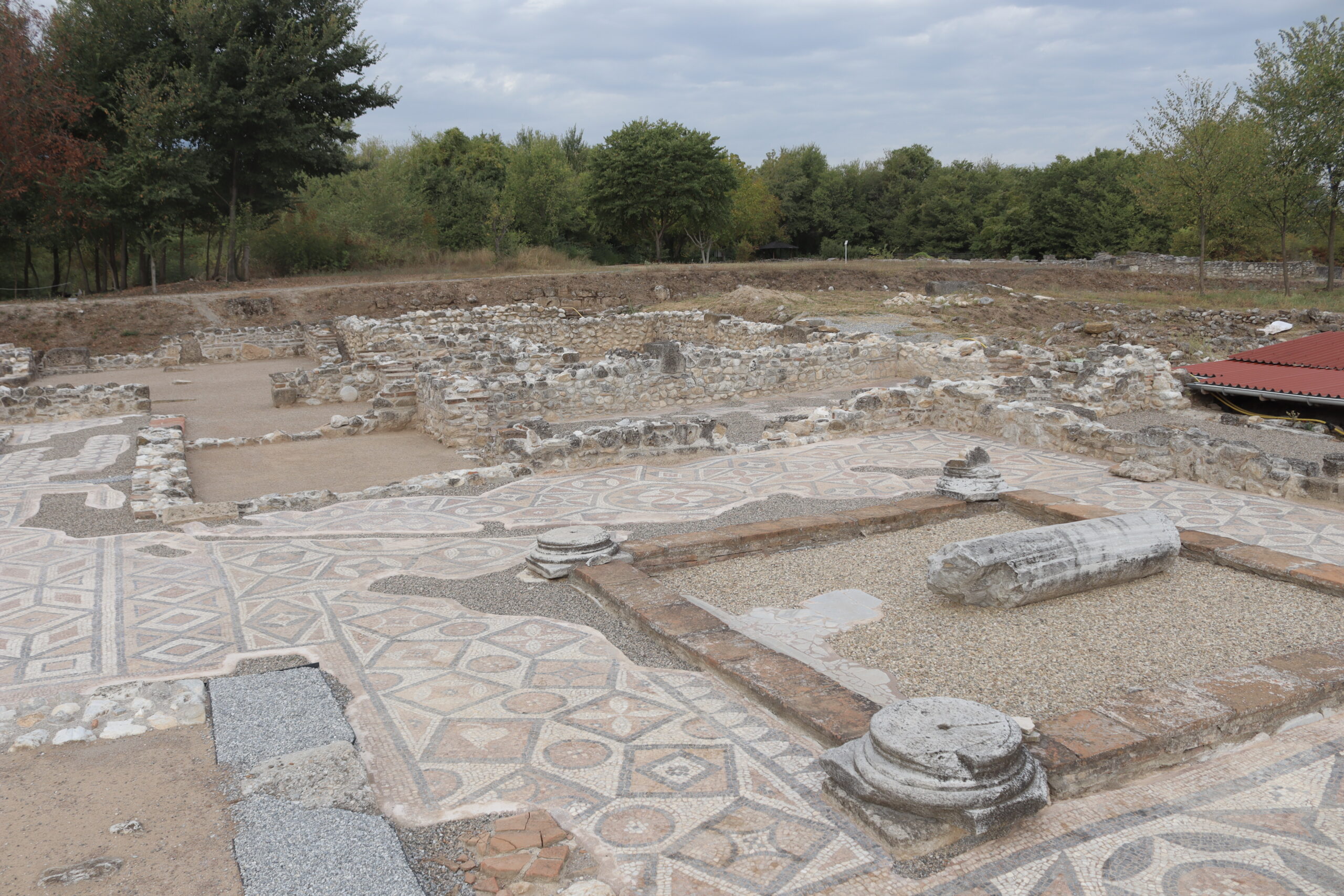
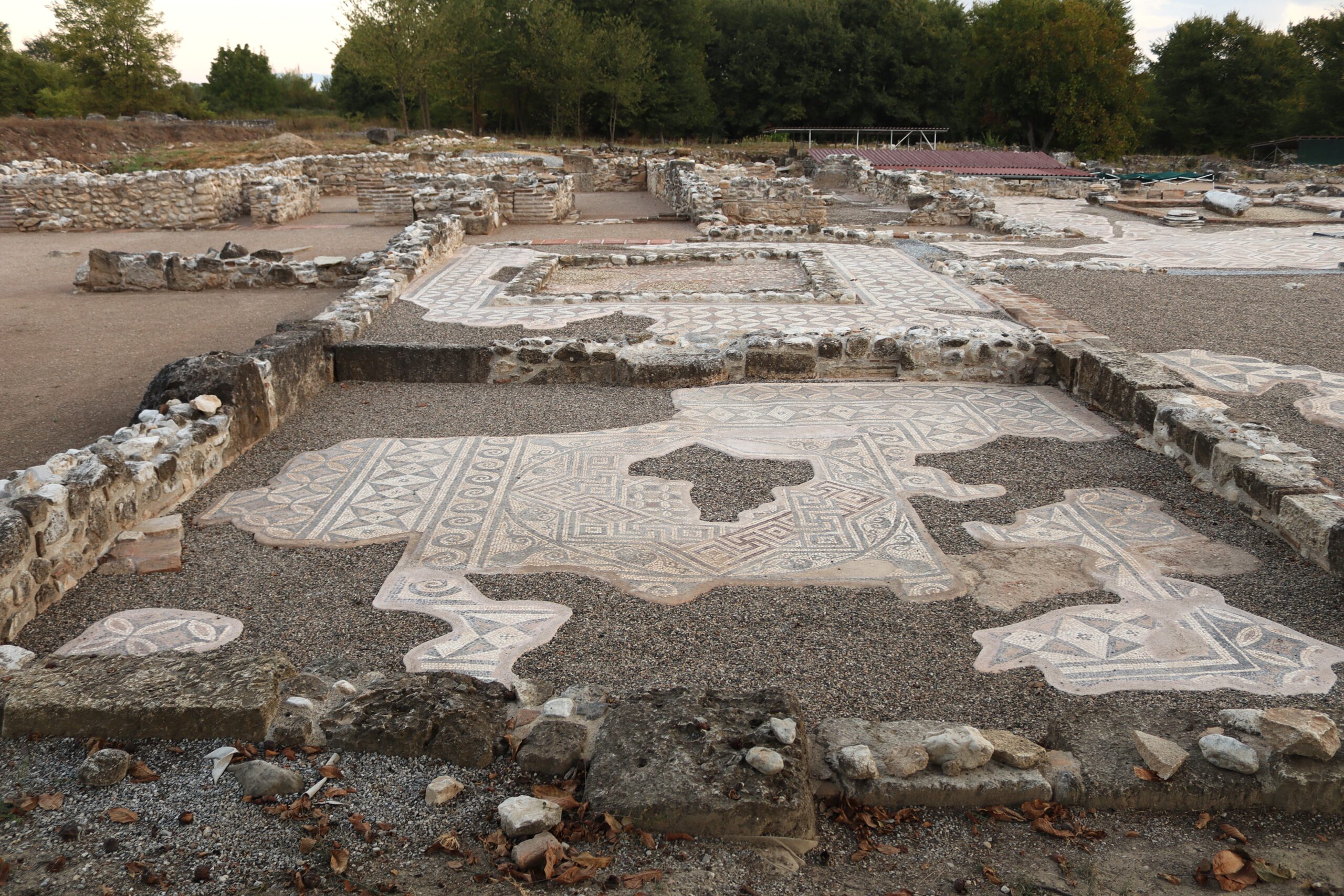
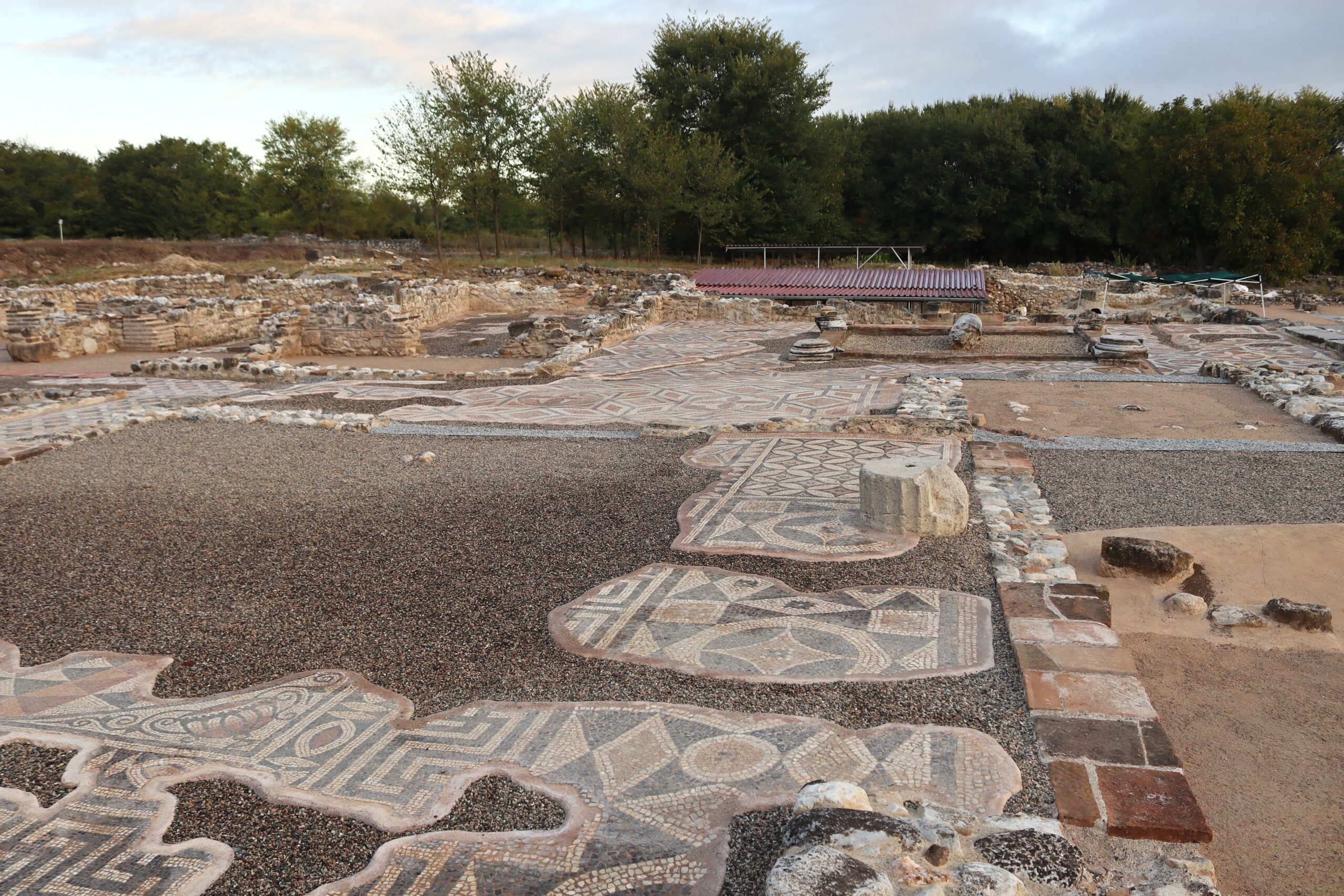
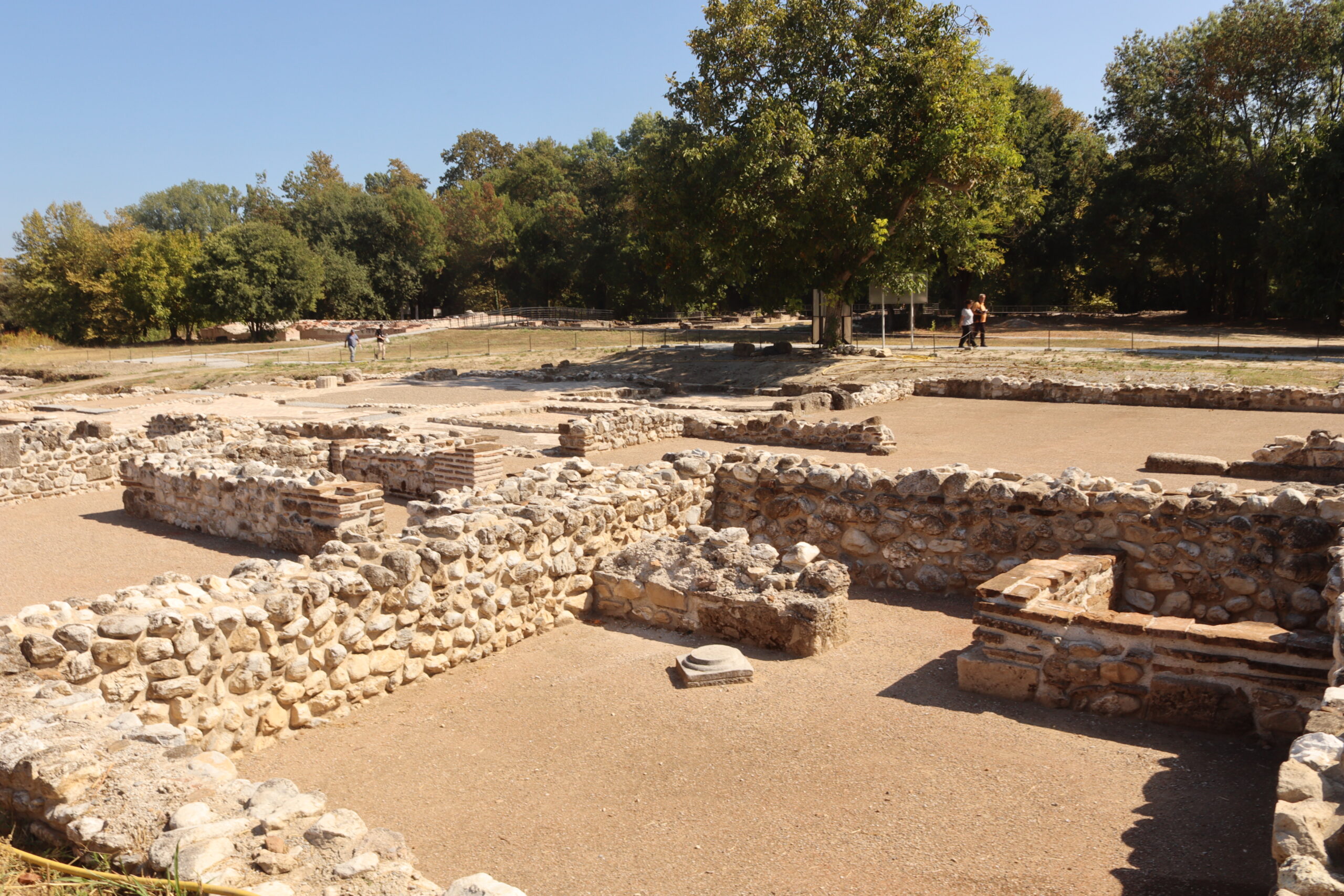
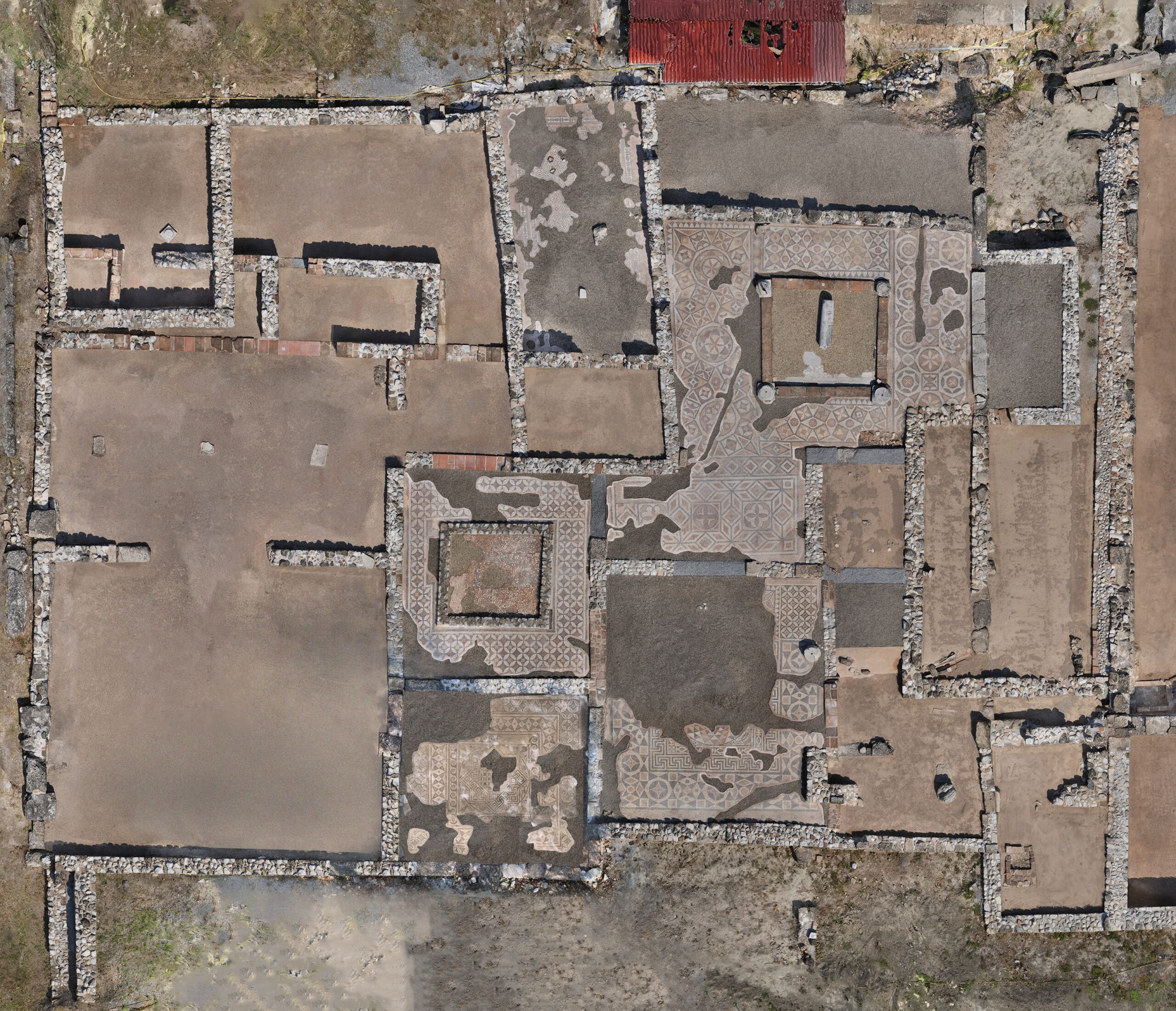
The residence was built on a terrace rising about 2 metres above the forum. It occupies an area of approximately 870 sq. m. and it was accessed via the adjacent paved street. The formal quarters of the house –including guest reception and dining rooms- were arranged around two interior courtyards (atria) with central cisterns (impluvia) for collecting rainwater. These quarters are adorned with beautiful mosaic floors covering approximately 250 sq. m. The sleeping quarters (cubicula) and the smaller auxiliary and storage rooms were more secluded from the noise of the courtyard.
The residence was occupied for a long period of time, from the 3rd-4th century until at least the 6th century CE. Τhe main occupation period dates to the 4th and 5th centuries CE. Throughout these centuries, the house’s water supply and sewage needs were met by a network of lead and brick pipes running beneath the floors.
The numerous archaeological finds from the residence, including coins, ceramic and glass vessels, metal objects and tools, bone and gold jewellery, provide valuable insights into the daily lives of the citizens of ancient Dion.
Every aspect of the “House of Epigenes”, from its elevated position next to the city’s agora to its layout featuring an interior courtyard and exquisite mosaics, was designed to showcase the owners’ wealth and influence in Roman society.