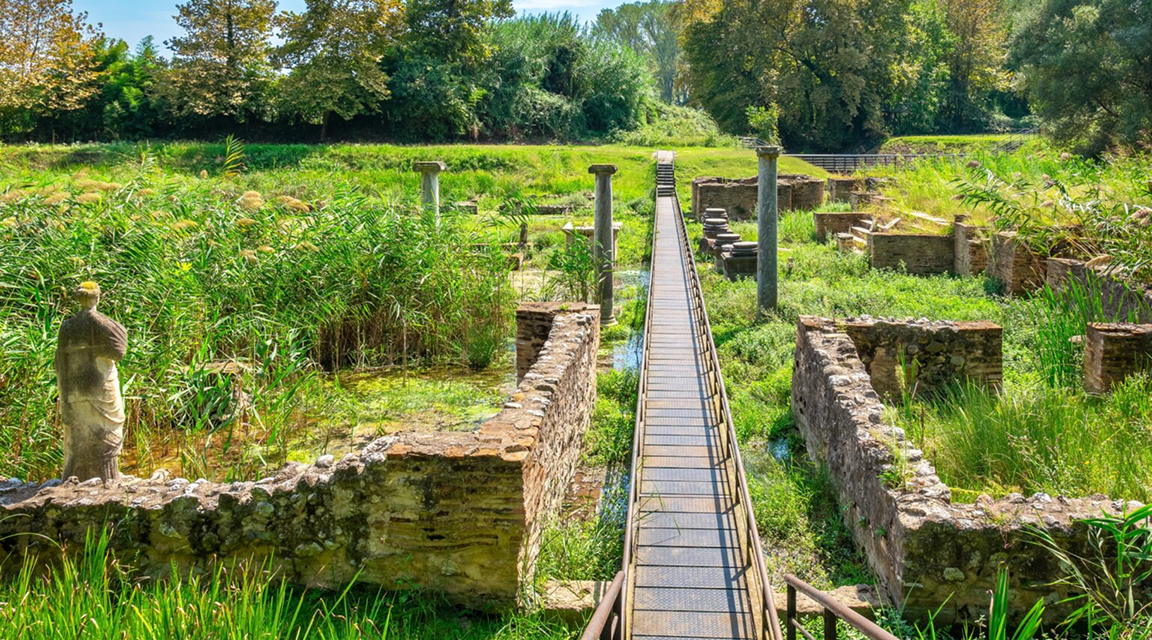
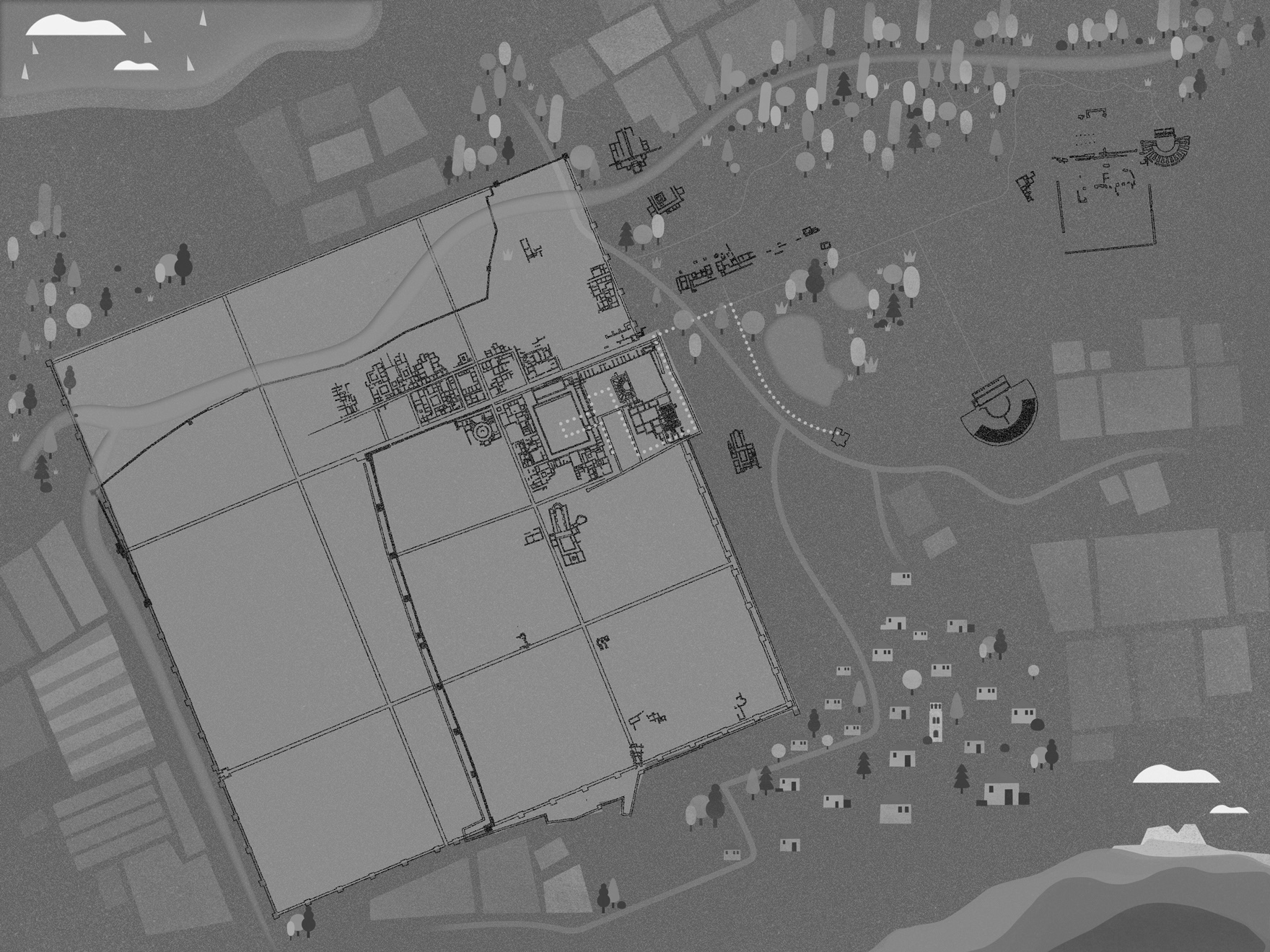
Beneath the shadow of Mount Olympus, in a unique setting with rich vegetation and abundant springs, lies Dion, the ancient site dedicated to the worship of Zeus. Its location is particularly advantageous, as it secures control over the passages connecting Thessaly to Macedonia. Along with Zeus Olympios, the site was also a place of worship for his daughters. The nine Muses. Every year, a grand nine-day-long celebration took place in their honor, the “Olympia in Dion.”
The sanctuary of Zeus Olympios was the religious center of the kingdom, as well as the place where Macedonian Kings displayed their power. The kings visited Dion often. Sometimes to make sacrifices in the name of Zeus Olympios, to perform purification rituals for the army, to give oaths of allegiance to the gods, and at other times to celebrate together with the army and the people.
Phillip the second also celebrated his glorious triumphs here! And it was from this very place that Alexander the Great set out on his campaign to Asia! Of course, only after he performed the customary games and offered sacrifices to Zeus.
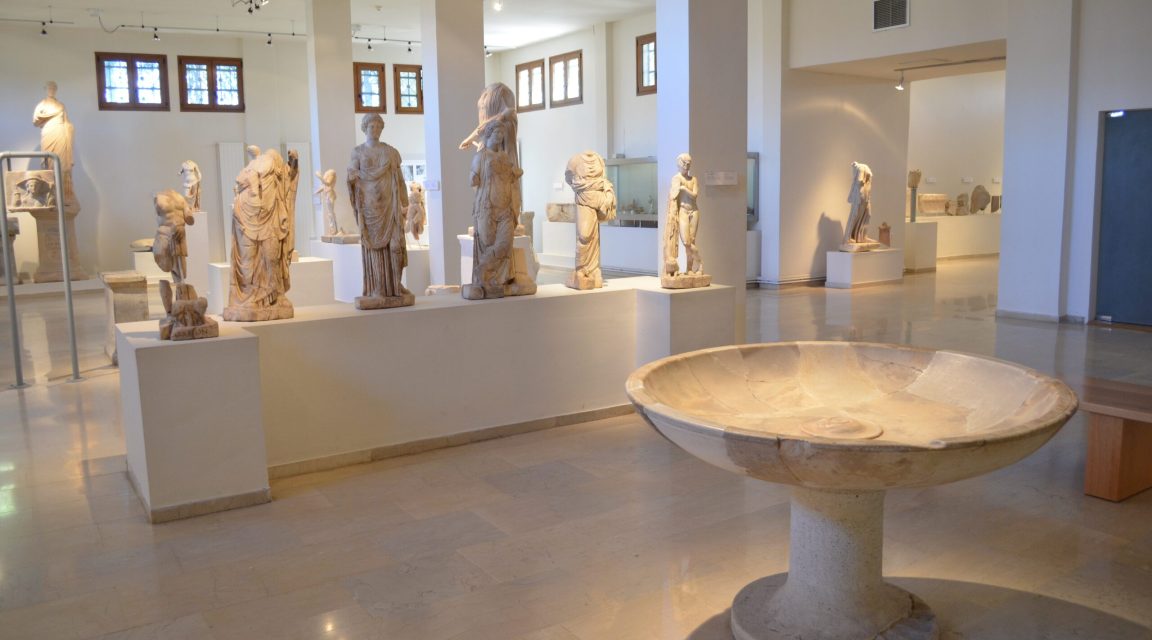
The sanctuary of Zeus Olympios also featured inscriptions containing royal texts to inform citizens, as well as statues. Among them were, for example, 25 equestrian statues, crafted by the great sculptor, Lysippos, commemorating the elite companion cavalry who had fallen during the battle along the Granikos River, against the Persians, in 334 BCE.
Excavations in this sacred site brought to light the sanctuary of Demeter, along with buildings and finds that date back to the 6th century BCE, the sanctuary of Asclepius, the sanctuary of Isis, where Artemis as the goddess of childbirth was initially worshiped, and the sanctuary of Zeus Hypsistos, along with the god’s cult statue and marble votive eagles.
Venues for the celebration of important religious festivals are also located in this area. These were: the Hellenistic Theater, the subsequent Roman Theater, and the Stadium. Having served as a place of worship, Dion developed over time into a thriving city, which was organized and fortified with monumental walls by the Macedonian king Kassander in the late 4th century BCE.
Having suffered numerous enemy invasions and pillaging, it was rebuilt several times.In the 1st century BCE, Dion was designated a Roman colony. Its name; Colonia Iulia Augusta Diensis.
During the 3rd and 4th century CE, it experienced a new period of prosperity, which is evident by the numerous public buildings, the Roman forum, the baths, the luxurious residences, the shops and the workshops that were unearthed.
Dion was established as seat of a bishop and flourished. A smaller fortification wall surrounded the city in the late 4th or early 5th century CE. Despite the shrinkage of the city’s size, a monumental episcopal basilica was constructed within its walls, along with a cemetery basilica outside the walls.
And as the centuries passed by, this ancient place of worship and urban life was covered under layers of soil and dust.Dion was abandoned, and it slipped into oblivion. Many centuries later, it was rediscovered by travelers and archaeologists.
Today, you get to discover it yourself!