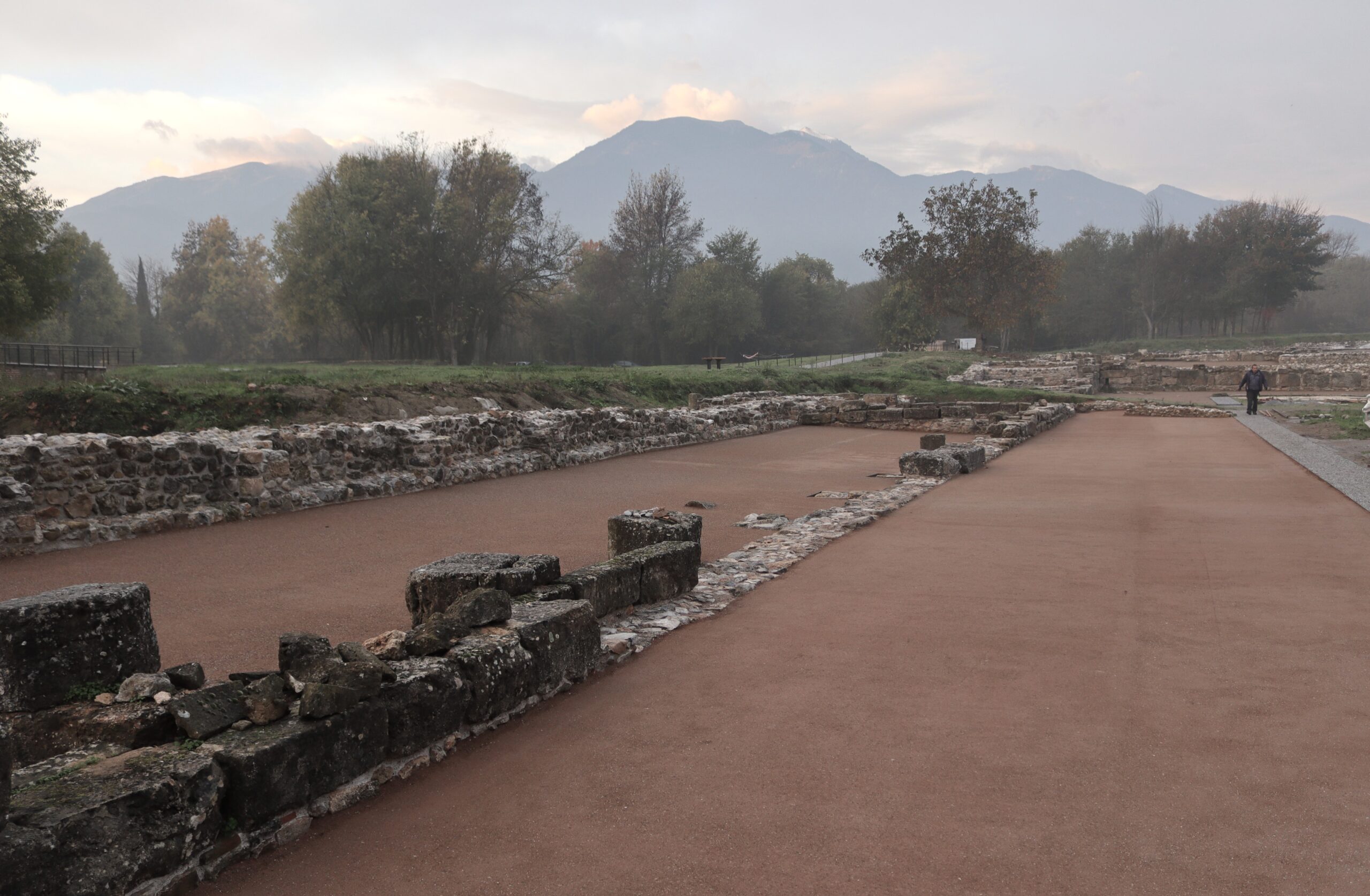
The administrative centre of the city
The Roman agora, or forum, was built as part of the same construction project as the “Great Baths” and the Odeum.
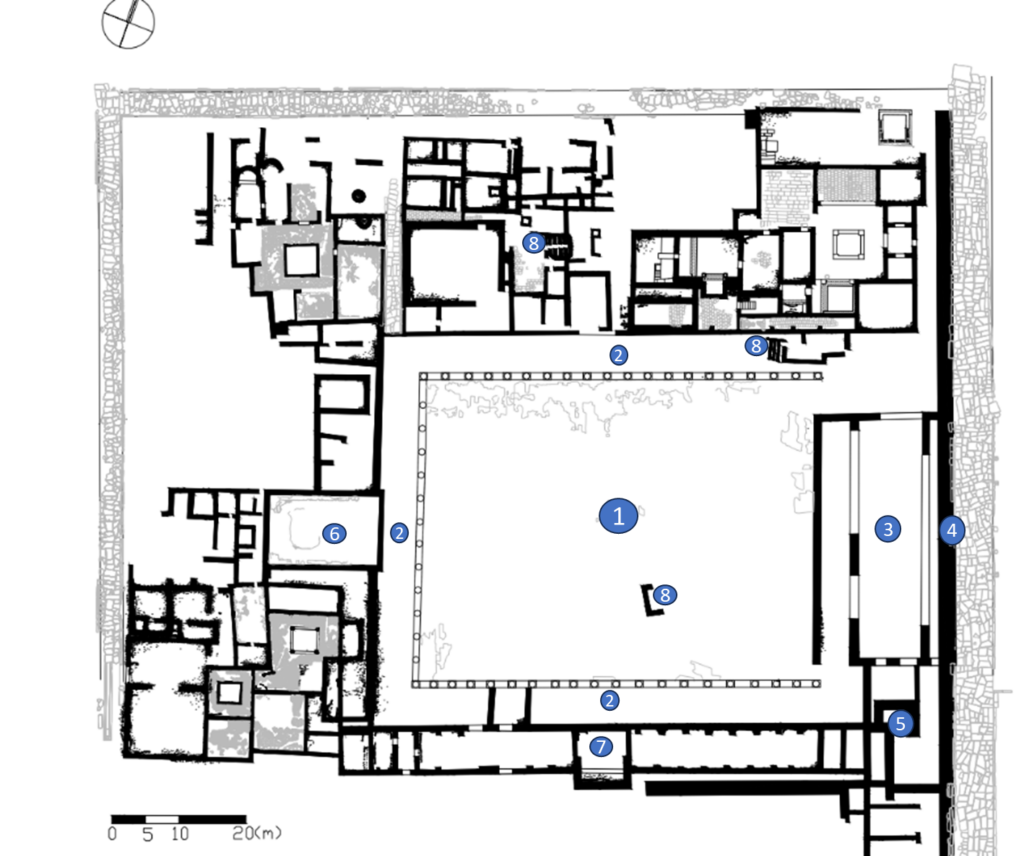
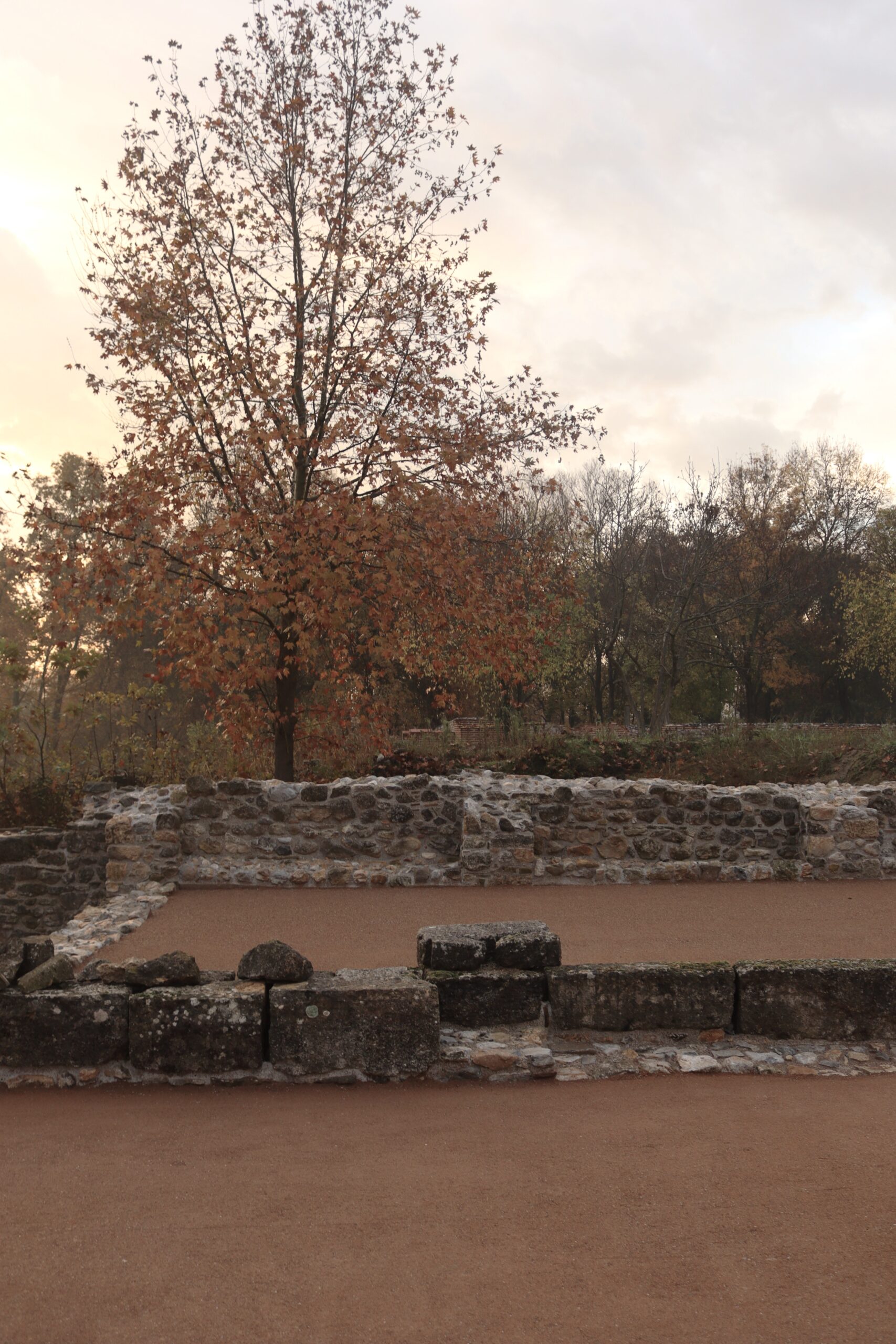
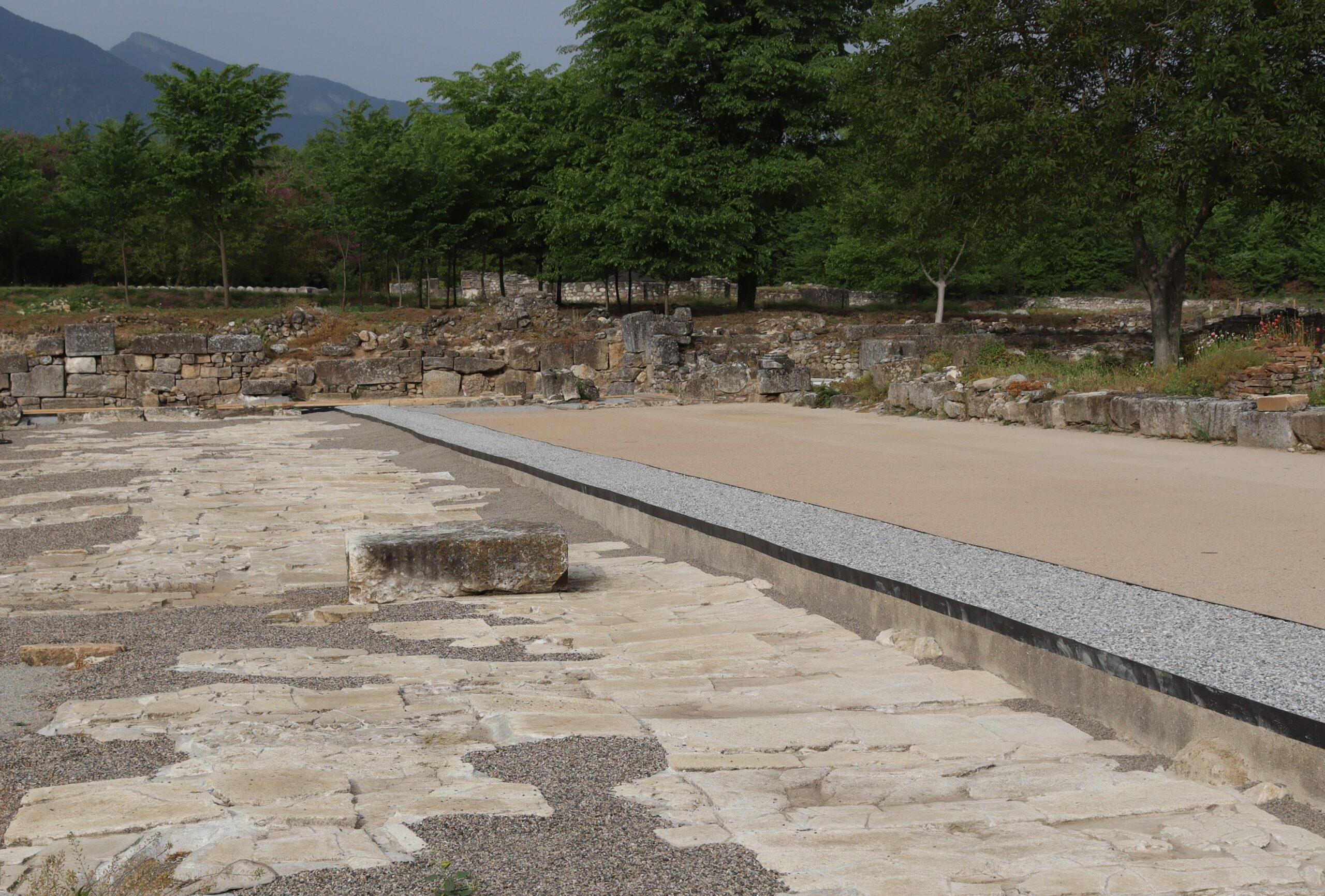
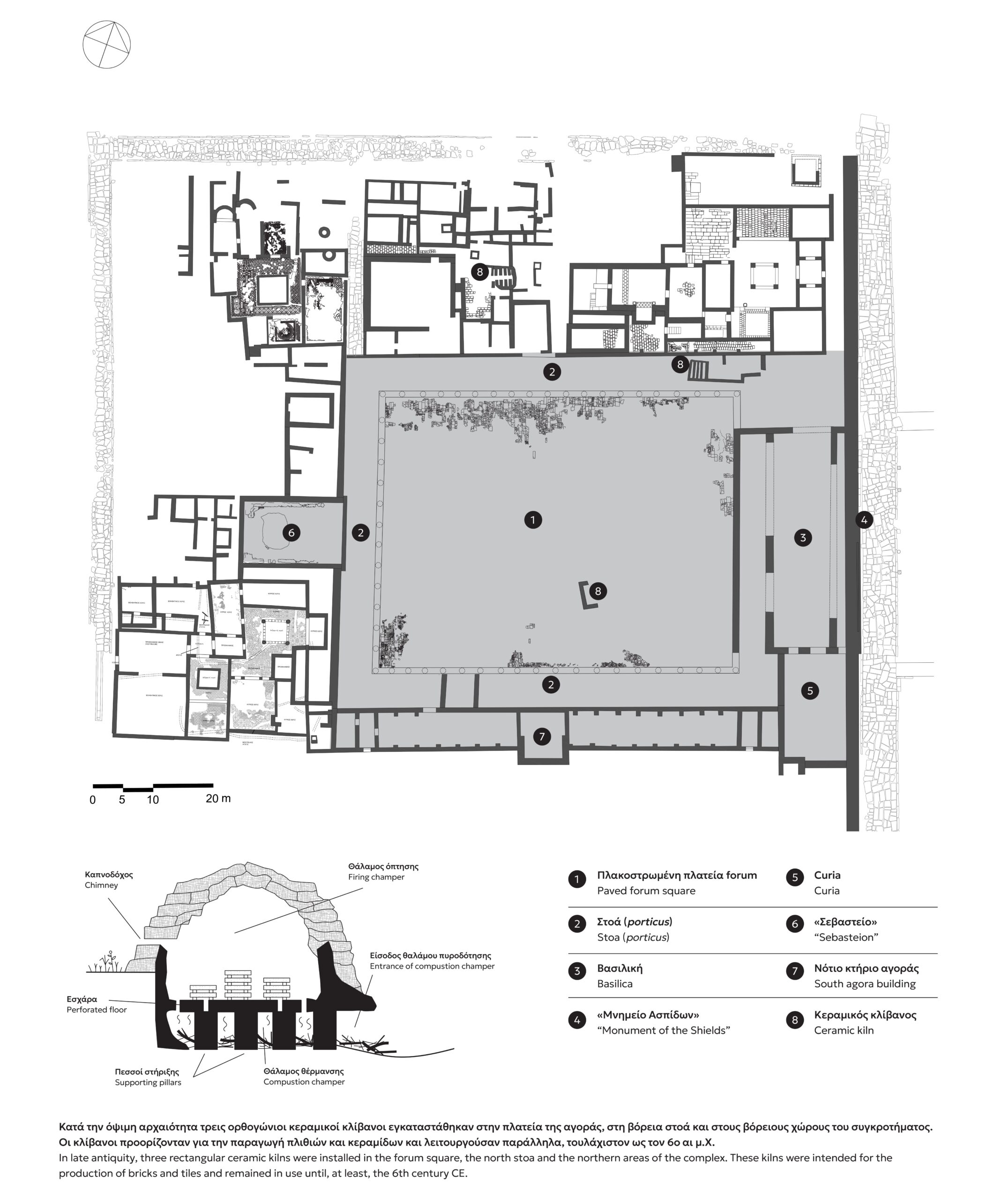
The forum was organized around a large, paved square, covering an area of 2,632 square meters, which was bordered by a continuous Π-shaped stoa (porticus) and public administrative and commercial buildings.
The forum functioned as a gathering place, where citizens and visitors could be informed about the affairs of the city, but also be entertained by listening to the speeches of philosophers and orators or by playing games.
The eastern side of the forum complex was closed off by a basilica (3), a three-aisled building with a colonnade façade, where banking and commercial transactions were carried out under the supervision of local officials. The façade of the basilica facing the main street of the city was decorated with a frieze with relief panels representing shields and cuirasses, the so-called “Monument of the Shields”, which originates from a Hellenistic building and has been incorporated there, in secondary use. Next to the basilica stood a spacious chamber that has been interpreted as a curia , that is, a council conference hall.
To the west stands a monumental building with a mosaic floor and wall paintings. It has been suggested that it is a Sebasteion, a temple dedicated to the official worship of Roman emperors.
To the south, extends a public building with a central hall and two elongated wings. The doorways at both ends are the only known points of access into the forum.
Following the dissemination of Christianity, the agora underwent a gradual transformation, ultimately losing its original public character. Evidence suggests that the site was utilised for the city’s workshop and commercial activities until at least the 6th century CE, as indicated by the presence of three ceramic workshops within the complex.