Archaelogical Park
The many years of excavations by the Aristotle University of Thessaloniki in ancient Dion have brought to light an extensive archaeological site, covering an area of 650 acres, making Dion the most fully excavated area in the Olympus region and one of the largest excavations of modern times in Greece. The open-air archaeological park includes two distinct sections, the area of the ancient sanctuaries and the walled city north of them.
The area of the sanctuaries of Dion covers an area of 220 acres. Foremost among the gods worshipped was Zeus, from whom Dion took its name, meaning “the place of Zeus”. The Sanctuary of Olympian Zeus, at the southernmost tip of the area, was the most venerated site of the ancient Macedonians. The sanctuary acquired particular prestige as the official religious center of the kingdom, during the 5th century. BC, during the reign of Archelaus. It was the site of official ceremonies, the celebration of military victories, such as Philip’s victory at Chaeronea, the celebration of the beginning of campaigns, such as that of Alexander the Great in Asia, and probably the established purification ceremonies of the army.
The oldest sanctuary of Zeus is that of Demeter and her daughter, Persephone. It was founded in the late archaic period, at the end of the 6th century BC, and its function continued with many additions and modifications until late antiquity, during the early Christian years.
During the Hellenistic and Roman periods, other important sanctuaries were founded and operated in the same area.
The sanctuary of Asclepius, in which the most important healing god in ancient Greek religion, Asclepius, son of Apollo, was worshipped.
The sanctuary of Zeus Hypsistos, whose worship dominated during the Roman period and the name “Hypsistos” replaced all the older hypostases of Zeus.
Finally, the sanctuary of the Egyptian gods, namely Isis, Sarapis and Anubis, in which Isis Lochia, Isis Tyche and with them Hypolympidia Aphrodite, the Aphrodite of the foothills of Olympus, were worshipped.
In the area of the sanctuaries are also located the two theaters of Zeus, the Hellenistic and the Roman. Nearby, now integrated into the urban fabric of the modern settlement of Dion and not open to the public, is the ancient stadium.
To the north of the area of the sanctuaries, a settlement developed that initially served the needs of worship and which was mentioned by Thucydides in 424 BC.
During the time of the Macedonian king Cassander, in the late 4th – early 3rd century BC, Dion was fortified with a monumental wall that enclosed an area of 430 acres, was organized urbanistically based on the Hippodamian system and also acquired public buildings of a monumental nature. In the 1st century BC it was converted into a Roman colony under the name Colonia Iulia Augusta Diensis. Later, probably in the late 3rd – early 4th century AD, an extensive building program was implemented in Dion, within the framework of which the public spaces of the city were renewed and new monumental complexes were added to its potential: buildings of a public and commercial nature, such as the Roman market (the forum), public baths (thermae), shops, a conservatory, public latrines, accommodation for state officials as well as guesthouses.
The private houses of the city were built by a wealthy and powerful elite, which perceived the residence not exclusively as a private space but as a component of public life and as a means of projecting its social prestige.
The large residential complexes (houses of Dionysus, Evvoulos, Epigenous, Zosa, Leda, Athena) that have been identified are characterized by particular luxury, which is reflected in their large dimensions, in the mosaic floors, in the colorful mortars of the walls and in the valuable movable finds.
After the prevalence of Christianity, Dion became the seat of a bishopric and experienced a period of prosperity. Despite the shrinkage of the city, in the late 4th or early 5th century AD, in a smaller fortified enclosure, a magnificent episcopal basilica was founded there, as well as a cemetery basilica, outside the walls, examples of the last heyday of the city, during the period of late antiquity.
Today, the archaeological park of Dion has an entrance building where information services are provided, a refreshment bar, restrooms and a photocopy shop. Paved walkways, disabled-friendly walking routes, information signs, shaded seating areas, water fountains and panoramic view towers, constitute a system of guidance and comfortable navigation for the visitor.

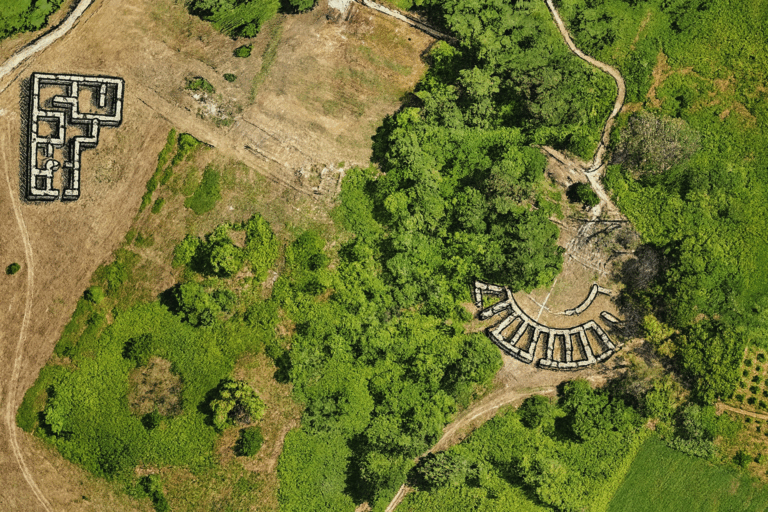
Sanctuaries & Theaters
In an area of approximately 220 acres, outside the walls of the ancient city, the place of worship of Zeus is located. The Sanctuary of Olympian Zeus, at the southernmost end of the area, was the most revered place of the ancient Macedonians.
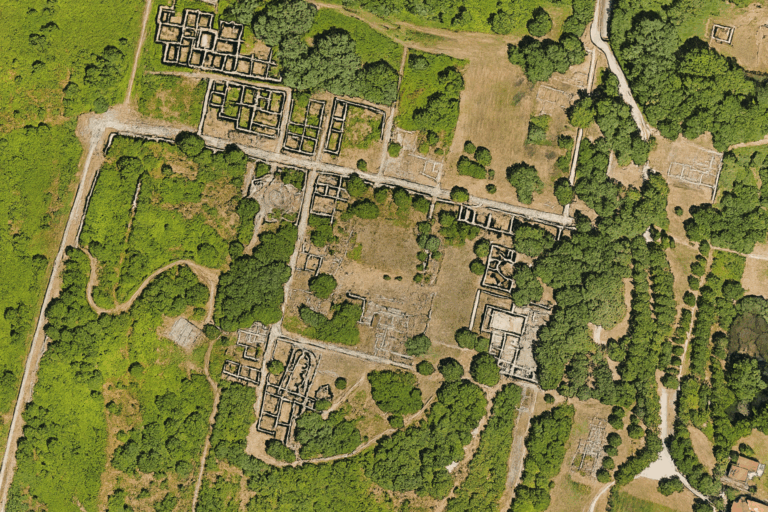
Fortified City
The city of Dion was one of the most important cities of the Macedonian kingdom, as in addition to its strategic geographical location, it was also where the official places of worship of the Macedonians were located.
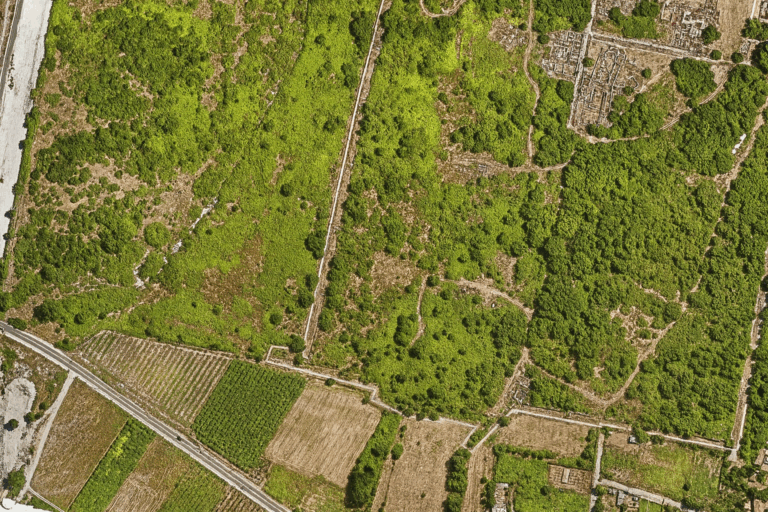
Other Monuments in the Dion Area
The centuries-old history of the ancient city of Dion is reflected in the correspondingly broad chronological framework of its cemeteries.